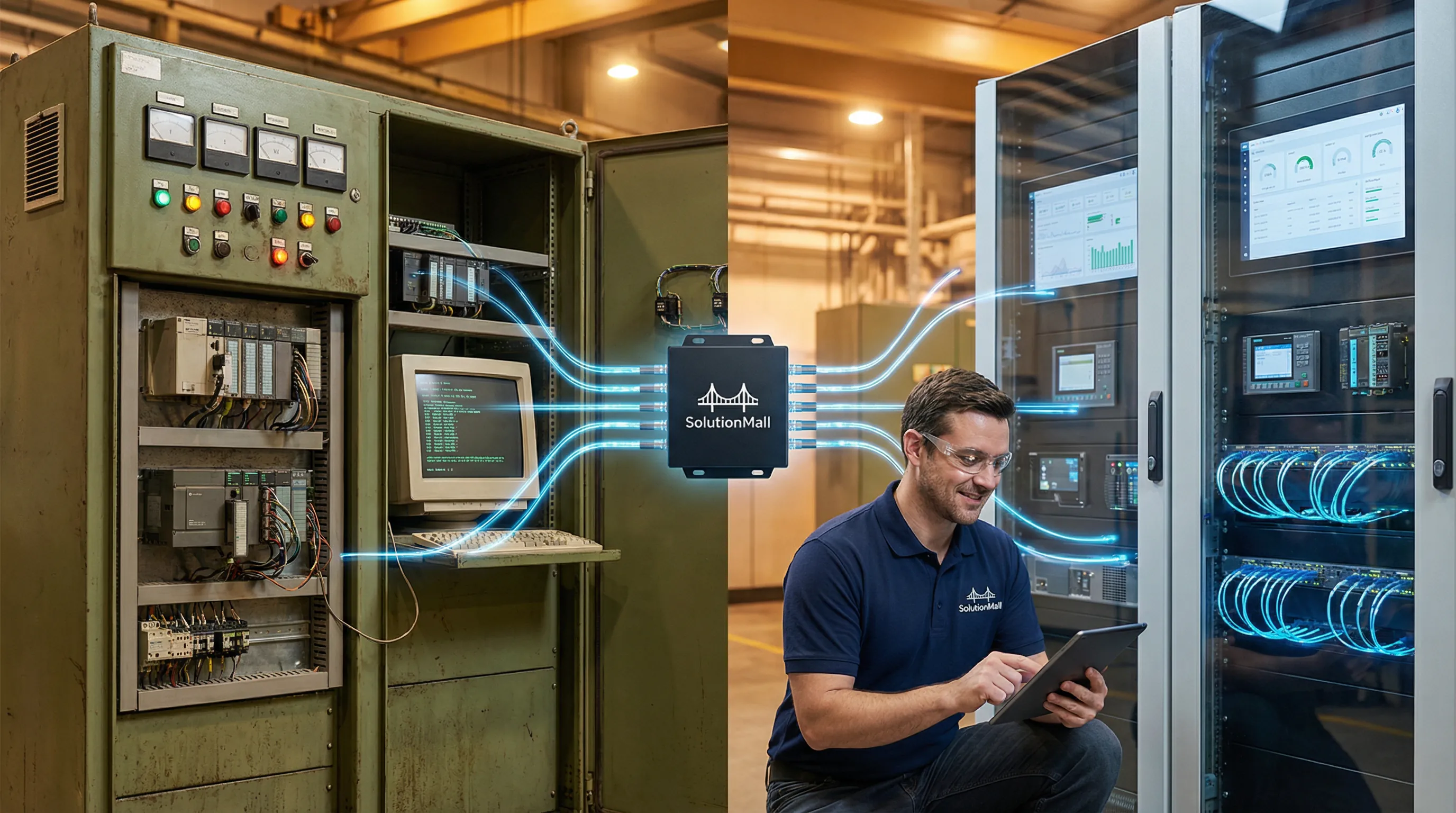
Equip your sales team and channel partners with the knowledge, language, and strategy to confidently position, pitch, and close computer and server solution deals across every industry vertical.
The first thing a salesperson must communicate is not "what device it is" but "what problem it solves in the system." A universal gateway is the connectivity hub between field devices, control systems, platform systems, and business applications.
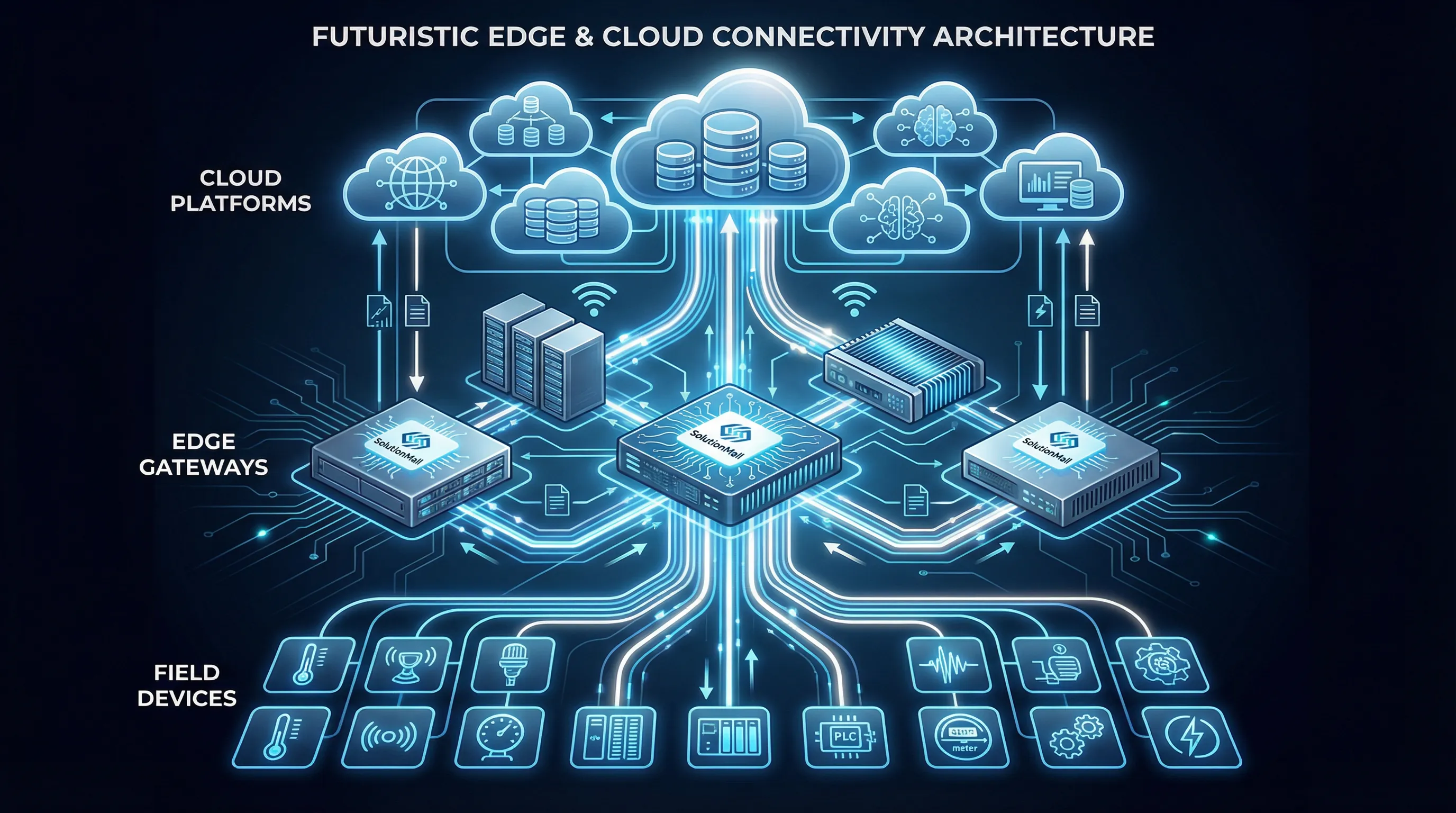
Customers are not buying a "protocol converter box." They are acquiring the capability to truly connect, deliver, and sustain long-term system operation.
Whether devices can be unified, data continuously uploaded, alerts closed-loop, and platforms linked — these are often determined by the gateway, not the front-end devices.
Many projects already have gateways — but the wrong ones. The result: initially seems to work, but later becomes unstable, hard to expand, and costly to maintain.
Customers who evaluate only by unit price often underestimate the gateway's decisive impact on system delivery, stable operation, and future scalability.
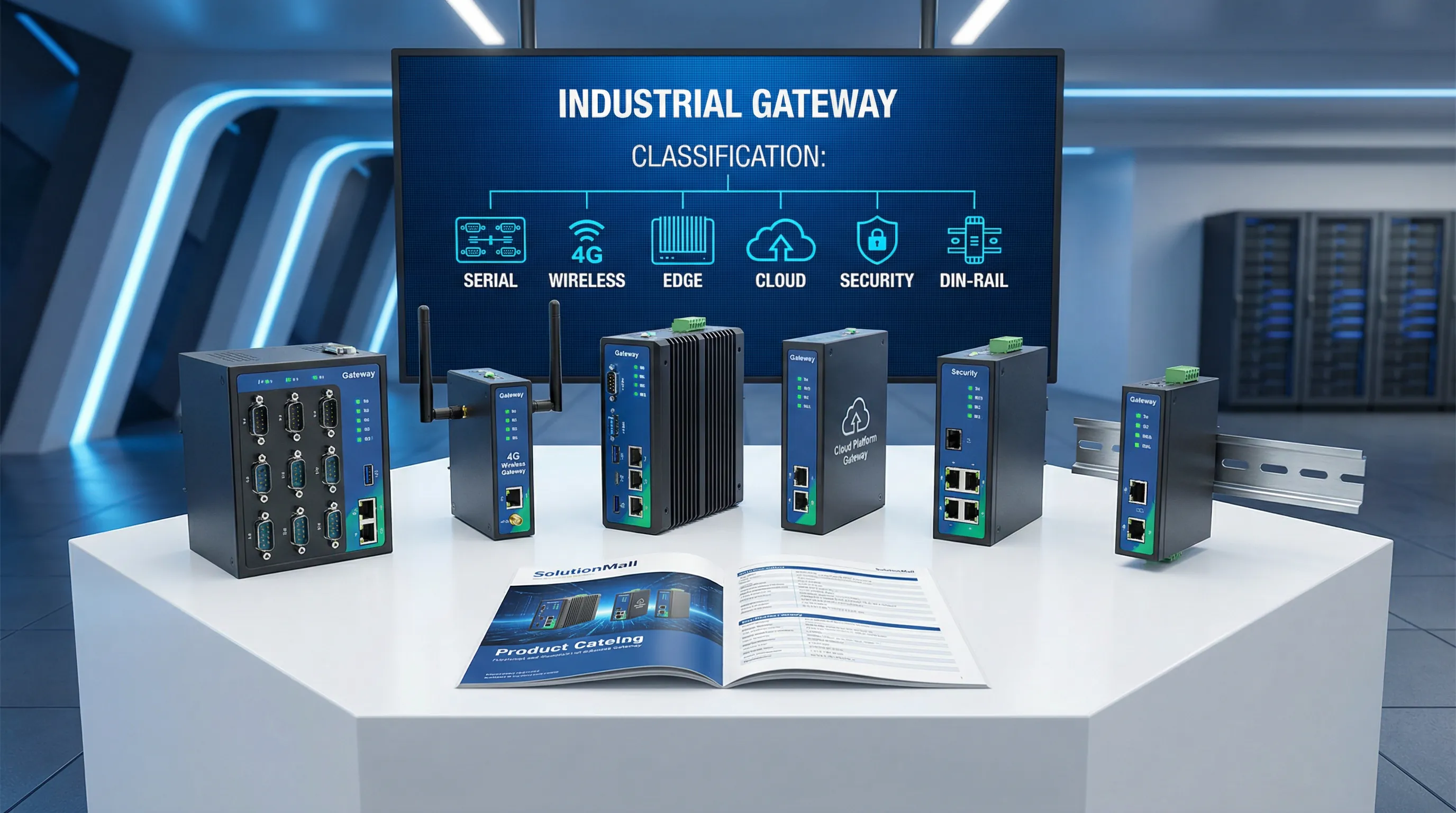
Don't memorize spec sheets. Build a clear product map and match products to customer scenarios and project roles — not model numbers.

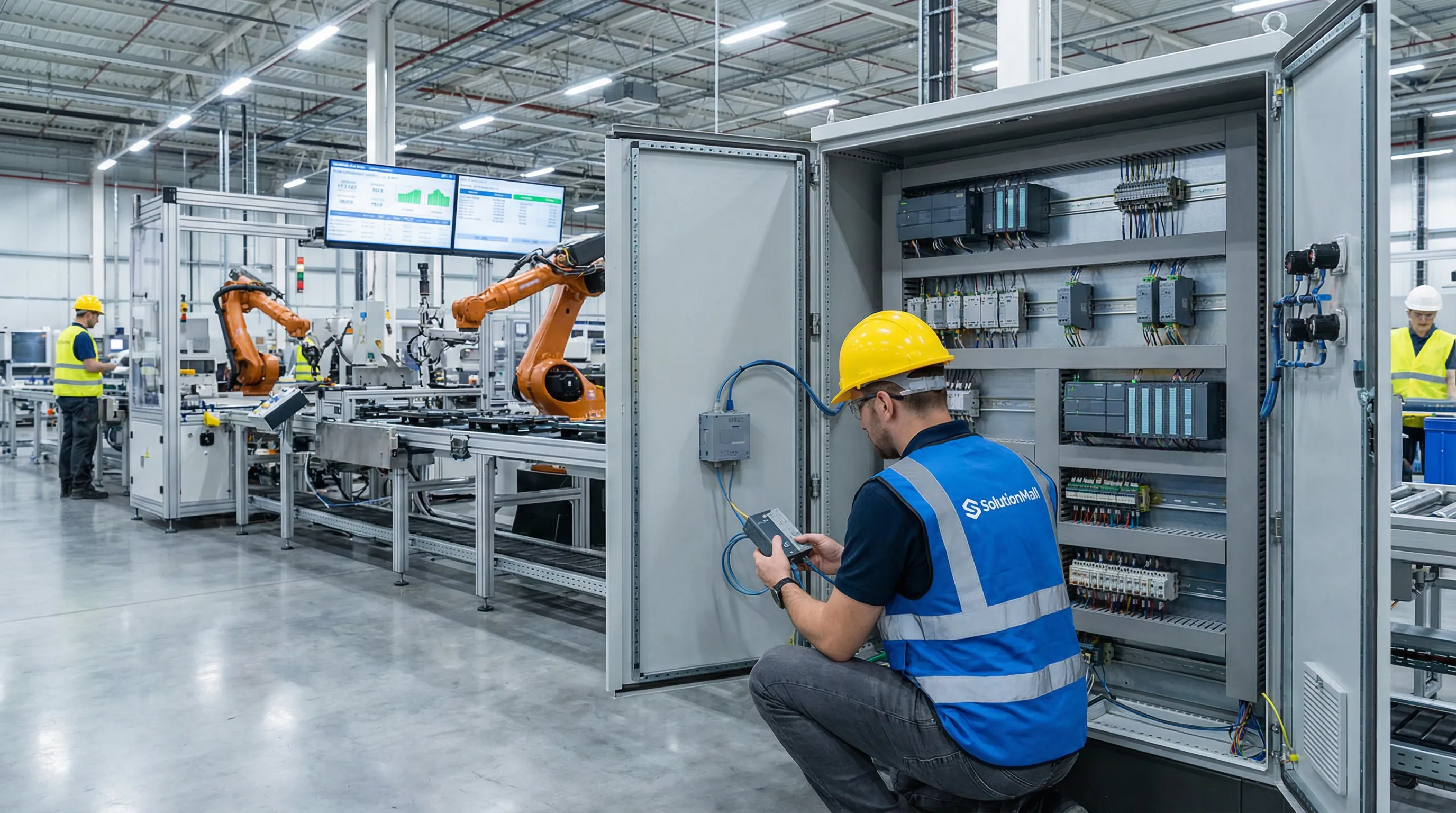
Solves the fundamental question: "How do field devices connect to the system?" This is the most common entry point for most projects and the broadest market segment.

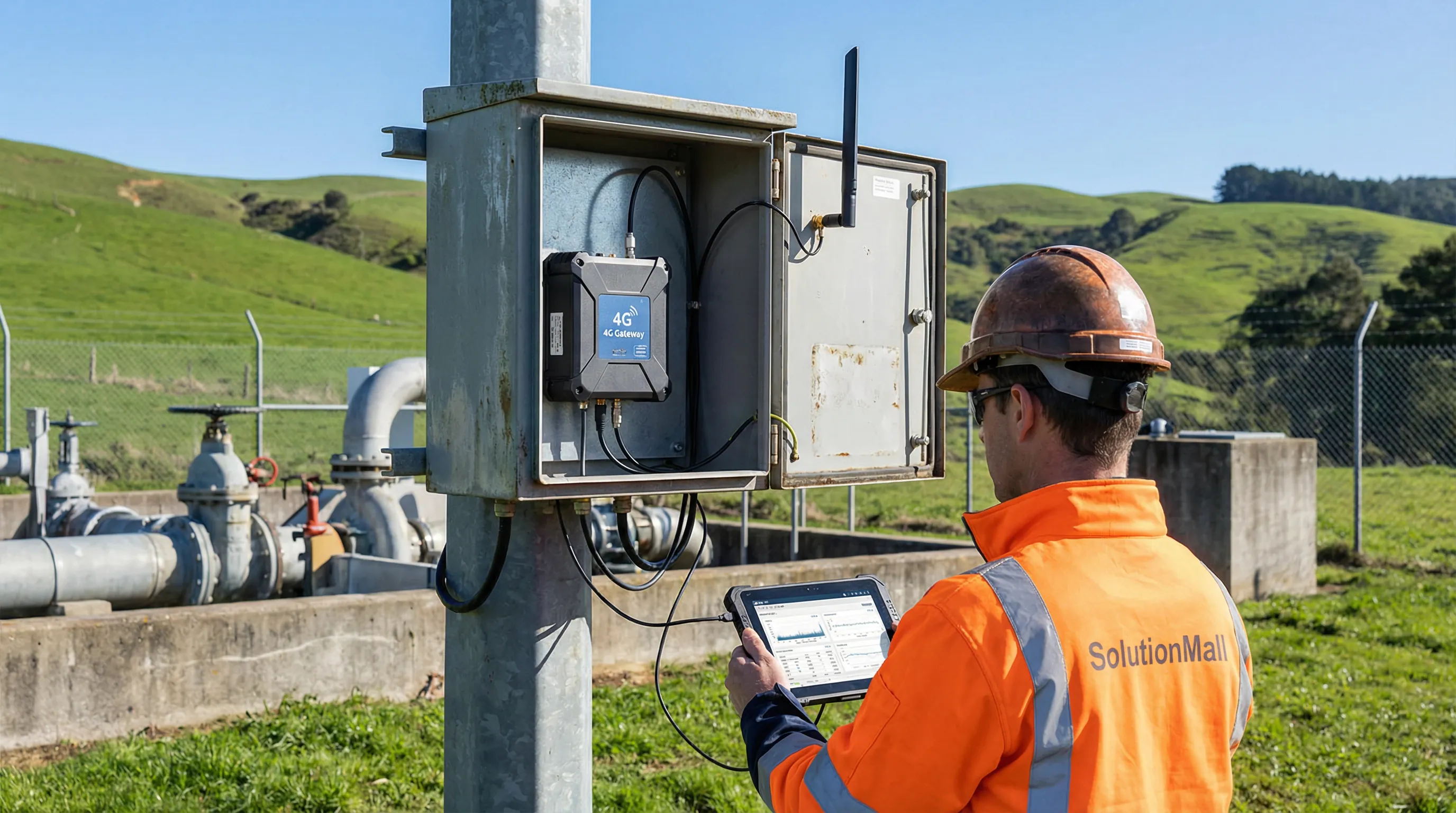
Solves the challenge: "What if there's no stable wired network on site?" Common in scattered sites, unmanned stations, and retrofit projects where value is immediately clear to customers.

Solves the challenge: "The site doesn't just need data collection — it needs local judgment, buffering, and linkage." More complex but higher value. The key to upgrading from "selling hardware" to "selling system capability."

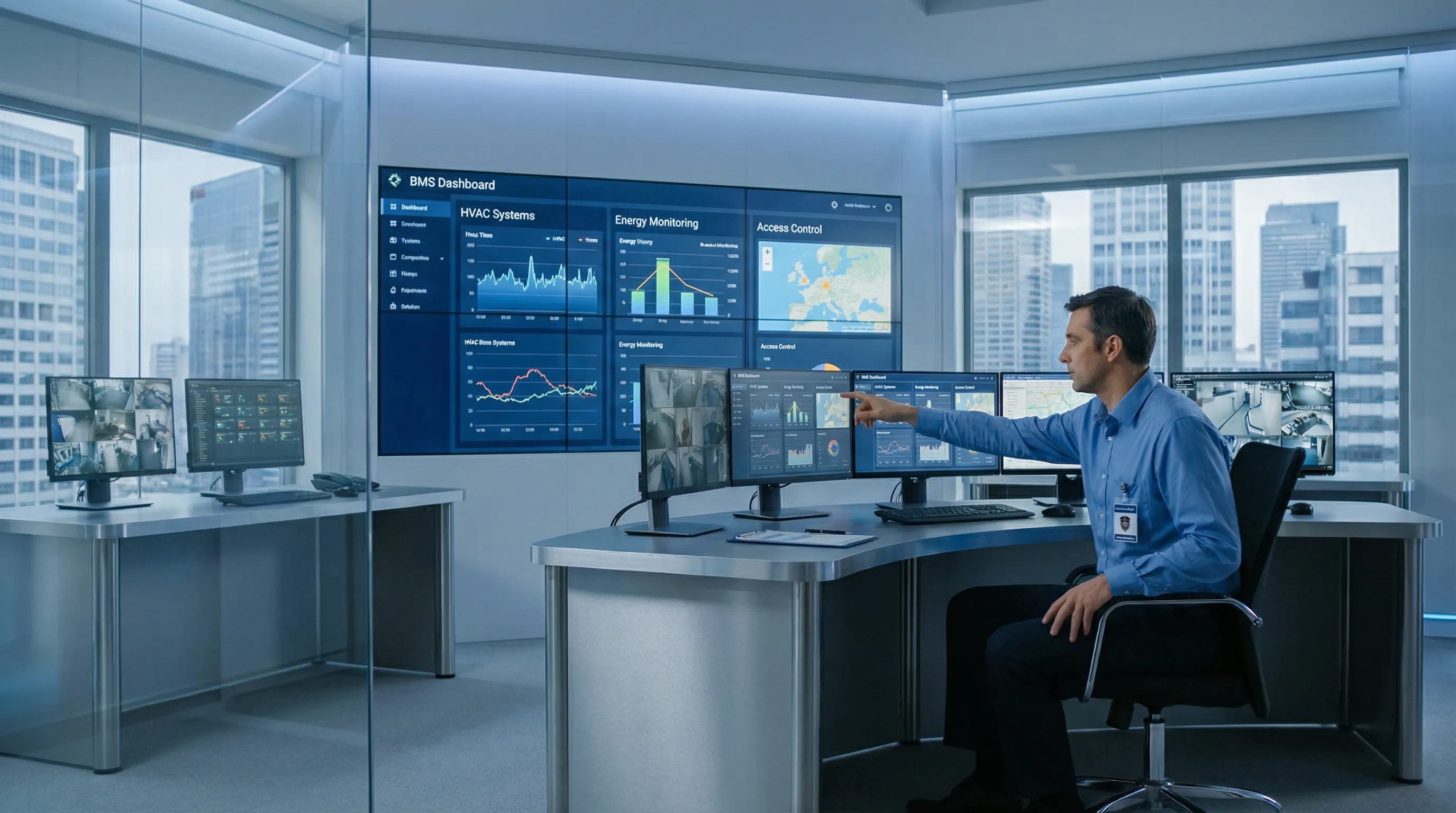
Solves the challenge: "Once front-end devices are connected, how do we integrate with BMS, EMS, IoT platforms, and business systems?" Best for solution-type expressions rather than pure price competition.

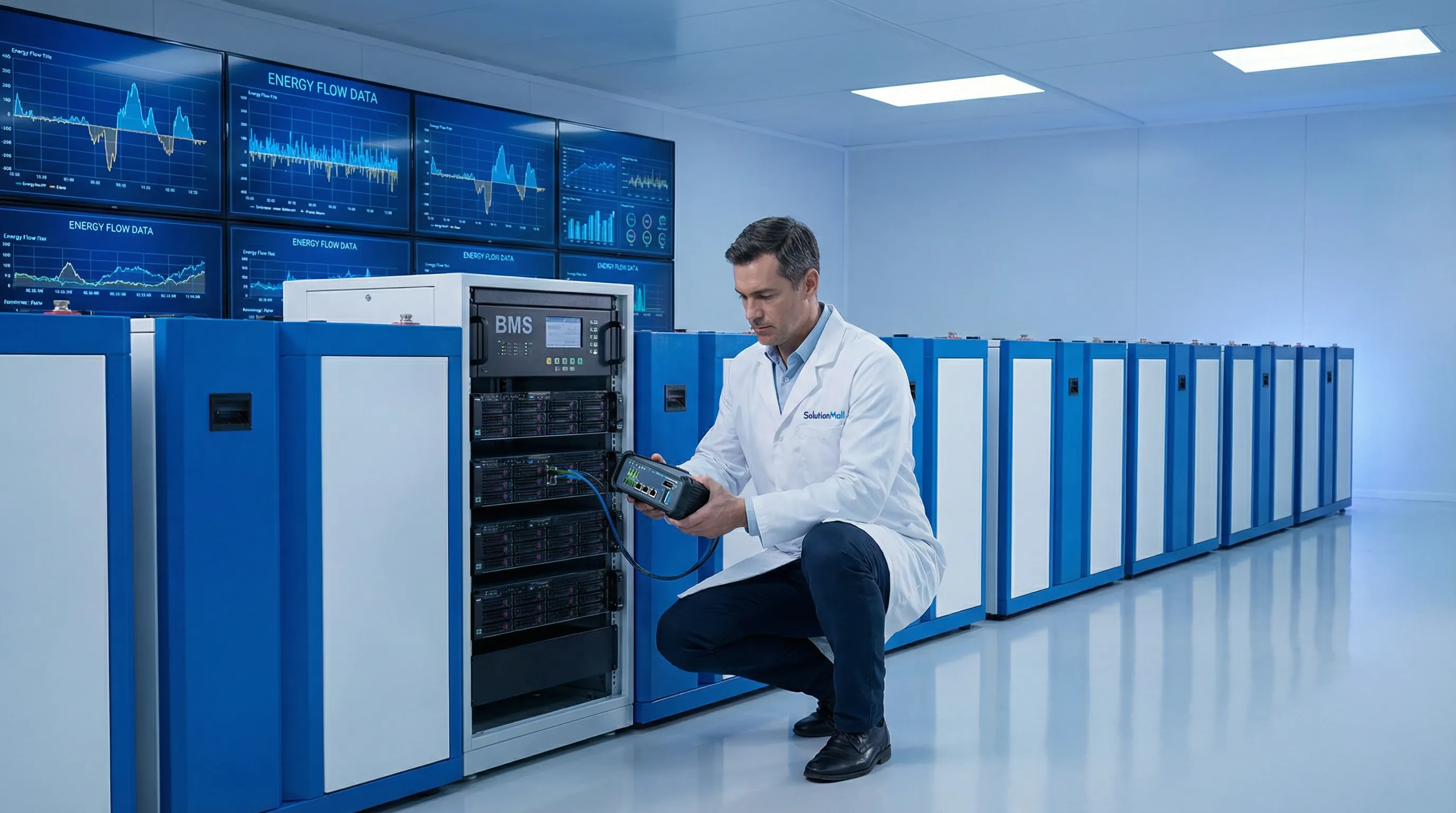
Solves the challenge: "Can the system run stably long-term? Can it connect securely?" In hospitals, energy storage, data centers, and critical facilities, these products demonstrate the highest professional value.

Solves the challenge: "Can this gateway actually be deployed in the project site and run long-term?" The right form factor is essential for real-world deployment success.
The products that create the most project value and generate the largest sales opportunity are not the cheapest basic connectors. Focus your energy here.
The most common, stable, and broadly demanded category. Factories, buildings, energy, water, and retrofit projects all need this. The best entry point for sales conversations.
Ideal for scattered sites, unmanned stations, and outdoor projects. Value is clear and tangible — customers immediately understand "remote maintenance cost savings."
More complex but higher value. Essential for local linkage, offline buffering, and alert loop-closure. The key to upgrading from hardware sales to system capability sales.
When customers already have a platform or need BMS/EMS/IoT integration, these products enable solution-type positioning rather than pure price competition.
In hospitals, energy storage, data centers, and critical facilities — these products demonstrate professional capability and project value at the highest level.
Categorize by role first, then by type: Access type? Remote type? Edge type? Platform type? Security type? Once the customer describes their scenario, you can instantly map the right product.
Customers don't buy gateways because they "want a gateway." They buy because real problems have already appeared in their projects.
Weak-current integrators, M&E contractors, automation integrators, building automation integrators, energy management integrators. They care most about compatibility, delivery efficiency, project risk, and long-term maintenance difficulty.
Campus O&M, property management, energy station operators, water utility operators, chain store maintenance teams. They prioritize remote management, stable operation, alert response, and maintenance efficiency.
Factory owners, campus owners, commercial complexes, hospitals, universities, transportation facility managers. They may not understand protocol details but care deeply about long-term stability and future expandability.
They embed gateways as part of their complete product offering — for remote after-sales service, remote maintenance, and platform connectivity. Gateway becomes a key differentiator in their product line.
Never pitch a gateway without context. The same product delivers entirely different value in different scenarios. Wrong scenario = wrong pitch = lost deal.


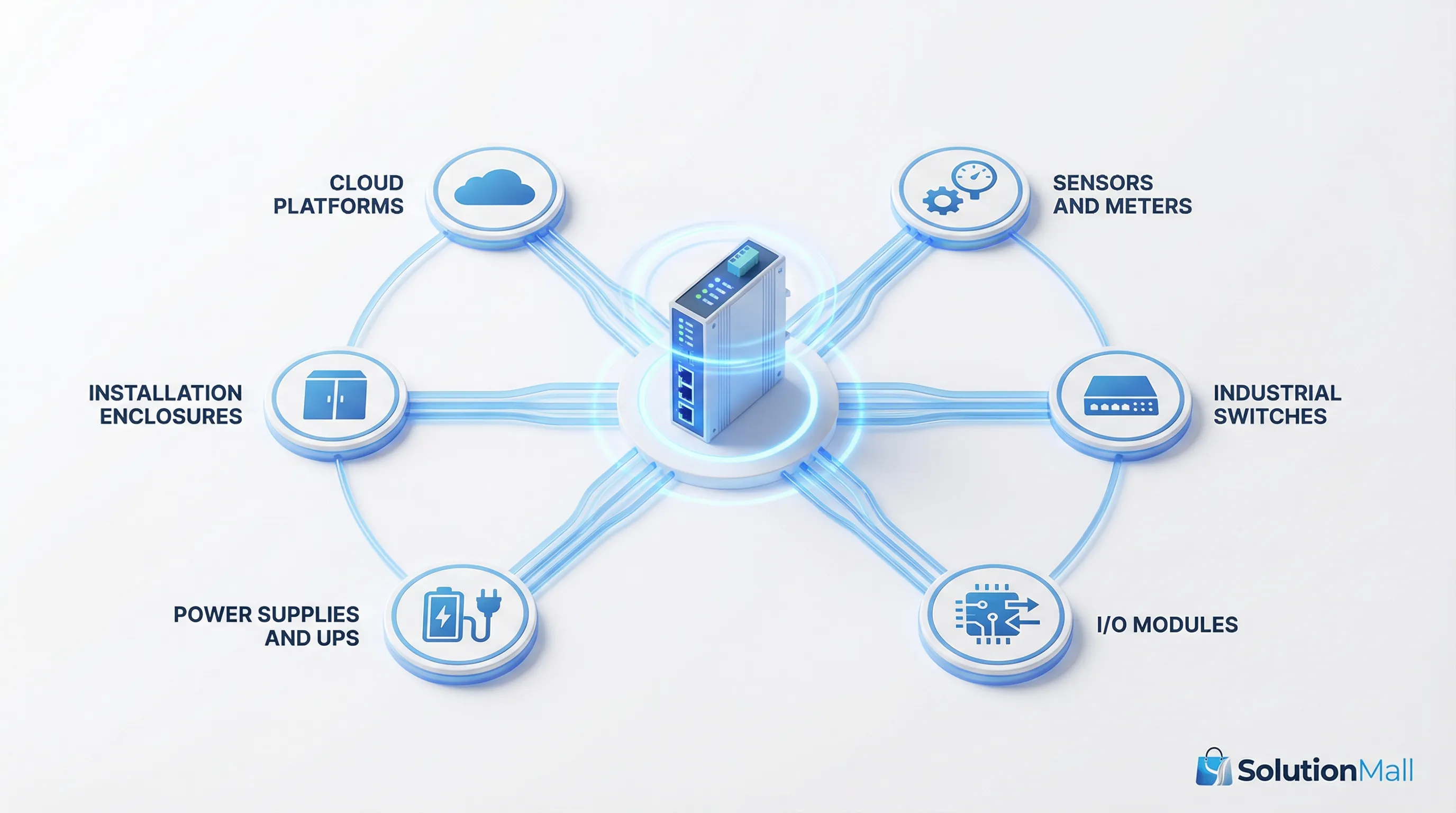
Universal gateways rarely sell in isolation. They are connector products, bridge products, and system products — both driving and being driven by the broader product ecosystem.
The fundamental need in most projects is "data collection." Gateways naturally appear alongside front-end devices. When customers buy sensors, gateways follow.
Gateways depend on reliable network links. Especially in remote sites and outdoor projects, communication accessories are critical companions.
Many projects don't just collect data — they need linkage and control. I/O modules and relay output modules extend gateway capability.
Gateways installed in field environments depend on power quality and protection. Power accessories directly determine operational stability.
Real project delivery means placing gateways in actual environments for long-term operation — not just on a desk. Installation hardware completes the solution.
BMS, EMS, IoT platforms, SCADA, O&M platforms, alert systems, databases, and business systems. Without platform integration, much of the gateway's value remains unrealized.
The gateway can be the main product — e.g., a remote site needing data collection and transmission only.
The gateway is a critical supporting product — not the only product, but the project can't run without it.
The gateway is the connectivity hub — connecting the entire solution in cloud-edge coordination, campus linkage, energy monitoring, and platform integration.
These are your high-frequency talking points — use them in presentations, proposals, and every customer conversation.
Heterogeneous devices from different brands, protocols, and eras all enter the same unified system — no more islands of data.
Data is not "sometimes visible" — it is continuously available, reliably transmitted, and always accessible when needed.
Even during network outages or abnormal conditions, the site remains controllable through local edge intelligence and autonomous operation.
Devices, platforms, and business applications form a closed loop — data flows seamlessly from field to cloud to business decisions.
Projects upgrade from "deliverable" to "sustainably maintainable" — remote visibility, remote diagnostics, remote control.
Today's access capability won't become tomorrow's retrofit obstacle — open standards, flexible expansion, future-proof architecture.
What to always do — and what to never do when selling universal gateway products.
Professional products are not sold as simple single items. True deal logic is a comprehensive solution to access + O&M + platform + delivery challenges.
Always connect products to specific scenarios and application requirements. The same gateway has completely different requirements in factories, buildings, pump stations, energy storage, and cold chain.
Look beyond purchase price to long-term cost and risk. One fewer site visit, one fewer downtime, one fewer system rework often exceeds the initial price difference.
Consider the complete delivery and closed-loop implementation. Don't just ensure "devices can ship" — assess whether the project can achieve stable access, commissioning, and closed-loop delivery.
In high-reliability scenarios, guide customers from "unit price comparison" to "system risk comparison." Security, stability, and continuous operation value often exceeds the apparent price difference.
Don't push overly complex projects beyond the team's delivery capability. If a project involves extensive custom protocols or complex control logic the team can't handle, never over-promise to win the deal.
Don't prioritize ultra-low-end, price-only products with no value space. If customers only want the cheapest "converter box" and completely disregard compatibility, stability, O&M, and platform capability, this is not a priority target.
Don't focus on directions that don't align with company positioning or can't form complete delivery. Don't just look for opportunities to sell one gateway — assess whether it can form follow-on packages, solution extensions, and brand value.
Don't make arbitrary commitments on high-risk control boundaries. Remote control permissions, energy storage linkage logic, critical device start/stop, hospital continuous system control — these must be confirmed by pre-sales or engineering teams.
Don't let customers treat gateways as universal replacements for everything. Gateways solve access, conversion, edge processing, and management problems — they don't solve all field problems. Never pitch them as a "one-device-fixes-everything" solution.
Every objection is an opportunity to demonstrate expertise and build trust. Use these response frameworks to guide customers toward better decisions.
Don't argue about price — shift the conversation from "unit price" to "total cost." Remind customers: gateways are not one-time consumables. Post-deployment debugging, maintenance, site visits, downtime, and expansion issues often cost far more than the initial price difference.
Acknowledge the starting point, but help the customer understand that a single device is only part of the access solution. If the field devices, platform, network, installation environment, and O&M requirements aren't considered together, the single device may connect initially but fail in practice.
Validate "connecting" as the first step, then explain that the real challenge is not day-one connectivity but stable long-term operation. Help customers anticipate: network cuts, power failures, abnormal recovery, remote maintenance, platform linkage, and future expansion.
Don't directly challenge the existing supplier. Enter from a complementary value angle — emphasize strengths in multi-protocol integration, remote site access, high-reliability scenarios, platform integration, or edge linkage. Position as filling gaps in the existing system, not replacing it entirely.
Affirm that they "worked" — but distinguish between "worked" and "suitable for long-term projects." Simple converters handle basic connections, but for multi-protocol, multi-site, remote maintenance, buffer retransmission, platform coordination, and security control, professional gateways show their true value.
Don't push the full high-end configuration. Help customers identify which capabilities are essential to preserve and which can be phased. Emphasize: with limited budgets, it's even more important to prioritize capabilities directly related to stable operation, data continuity, and future expandability.
Don't tell customers they're wrong. Remind them: many projects don't prioritize these initially because the scale is small and problems haven't surfaced. Once sites multiply, time passes, and systems grow complex, remote maintenance and security rapidly become critical requirements — not optional extras.
Acknowledge that not every small project needs the most complex solution — but remind customers that small doesn't mean basic correctness can be ignored. Even small projects need protocol matching, environmental adaptation, stable power, and basic maintainability. Professional means avoiding obvious mistakes from the start.